Broad Soft

  • Subscribe to our RSS feed.
  • Twitter
  • StumbleUpon
  • Reddit
  • Facebook
  • Digg

Friday, 20 September 2013

What Declining Product Demand Looks Like at Colleges, Hotels

Posted on 06:40 by Unknown
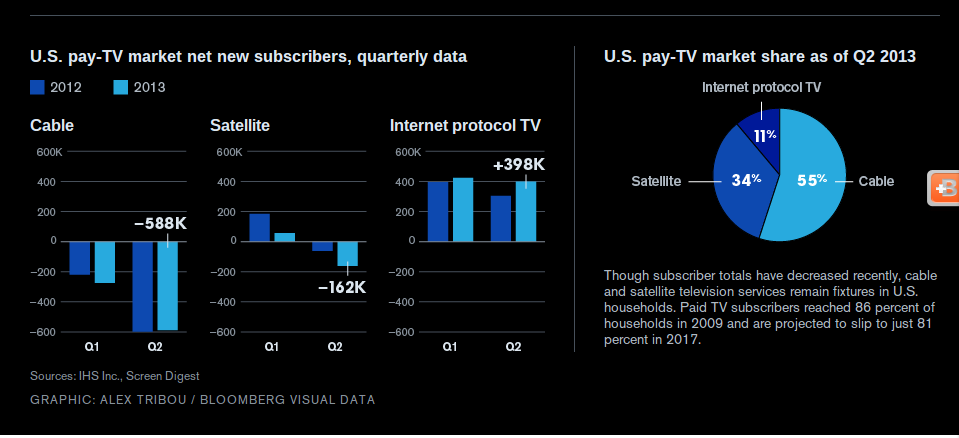
Declining product demand already has hit hotel revenue streams, in the form of vastly-lower telecom revenue from guests. Now it appears we are seeing similar declining demand for entertainment video subscriptions, in an important demographic.

It’s hard to ignore the lack of demand that has lead Northwestern University to get out of the business of providing a cable TV entertainment service on campus.

That would follow a general move away from providing in-room telephone service on college and university campuses with student housing that has been underway since the mid-2000s.

Some might say college students prefer to watch TV on devices other than TV screens. Others would say Netflix is the preferred choice for video entertainment, since paying for Internet access tends not be an issue, and access tends to be fast.

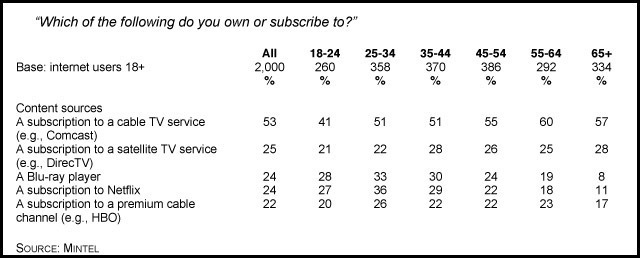
The big issue is whether college students are acquiring new habits that will persist after they have graduated. In fact, there already is evidence that earlier generations of students have indeed been less enthusiastic adopters of the subscription TV service habit when they have gotten into the workforce.

In fact, newly formed households have been buying subscription TV at lower rates than older consumers. While 3.2 million new U.S. households were set up since about 2010, the subscription TV industry (cable, satellite, telco TV) only added 250,000 subscriptions in that same period, according to SNL Kagan.

That is an issue for younger people overall, who seem to be losing their appetite for  subscription TV. It has been a standard pattern for some time that older people subscriber at higher rates than younger people.

Some might attribute at least part of that to lower typical incomes for younger age cohorts, and that is a reasonable enough assumption. But evidence is growing that even households with no apparent inability to pay.

For starters, Millennials watch less traditional television than any other demographic, suggesting they find the product less engaging than older people might.

Some 13 percent of 18 to 34 year olds (8.6 million) who already have broadband service are committed to a broadband-only existence, with no plans to buy a subscription TV service.

In addition, many consumers who do buy service are at least considering dropping their entertainment video service (17.9 million 18-34s, as well as 32 million 18-49s).

Perhaps seven percent of potential churn candidates indicate they would consider keeping their TV subscriptions if offered programming streamed live and on demand, anywhere.

More significantly, 58 percent of broadband-only subscribers would consider subscribing to TV for a bundle of networks from their broadband provider, streamed live and on demand.

The study, sponsored by programming channel Pivot, was conducted by Miner & Co. Studio in association with Beagle Insight.

The point is that demand for subscription TV is on the wane, among younger consumers.


To be sure, colleges and universities already had discovered that selling telephone service no longer makes sense, given widespread, virtually ubiquitous use of mobile phones by college students.

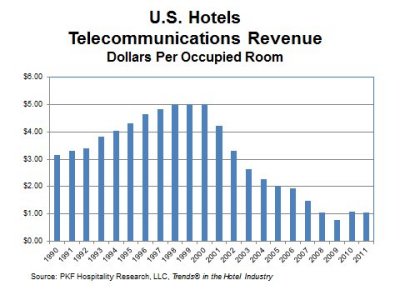
That mirrors similar trends for hotel-supplied telecom services, which also fell dramatically after 2000, which is very close to the peak year for fixed line usage in the U.S. market, as well.

According to PKF Hospitality Research, telecommunications revenue at the average U.S. hotel declined from a peak of $1,274 per available room (PAR) in 2000 to $269 PAR in 2011, a 79 percent decline.  

During the 1990s, telecommunications revenues used to account for three percent of total hotel sales.  In 2011, that number declined to just 0.6 percent of sales.

In fact, some would argue that telecommunications service in guest rooms now “costs” most hotels money.  In 2011, for every dollar of telecommunications revenue earned, the average hotel spent $1.46. In other words, in-room telephone service now is an expense item, not a revenue generator.

Also, as U.S. communications service providers also have discovered, it now is Internet access that is driving revenues, not voice services. An uptick in telecommunications revenue at hotels surveyed by PKF Hospitality Research in 2011 and 2011 suggests Internet access now is lifting revenue.

Email ThisBlogThis!Share to XShare to Facebook
Posted in | No comments
Newer Post Older Post Home

0 comments:

Post a Comment

Subscribe to: Post Comments (Atom)

Popular Posts

  • Seattle's Gigabit Squared Fails: Sustainability Remains an Issue for Muni Access Networks
    Seattle's Gigabit Squared  network appears to have failed, illustrating a recurring problem with all municipal or joint venture Internet...
  • All 4 U.S. Leading Mobile Providers Abandon Metered Voice
    With a recent move by AT&T, all four of the leading U.S. mobile service providers now offer the overwhelming number of subsctribers serv...
  • Smart Phone Shipments Will Be 82% of All Handset Sales in 2017
    Global smartphone shipments are forecast to reach 1.8 billion in 2017, accounting for 82 percent of total mobile phone handset shipments, up...
  • U.K. Looks for 650 MHz More Wi-Fi and Mobile Spectrum
    U.K. communications regulator Ofcom is investigating ways to free up up more mobile broadband and Wi-Fi spectrum over the next decade or two...
  • Above-Average Economic Growth in "Developing" Regions Will Drive Communications Growth as Well
    Generally speaking, consumption of communications products and services tracks gross domestic product. So it makes a great deal of differenc...
  • Revenue Sluggishness Will Propel Consolidation Wave
    Whether telecom revenue is growing, flat or shrinking has enormous consequences for any communications service provider, for obvious reasons...
  • Mobile Business Now Faces "End of Growth" Driven by Subscriber Adds
    In the second quarter of 2013, U.S. mobile service providers added an aggregate net new 139,000 connections, down about 95 percent from the ...
  • Telekom Austria Wants to Buy Serbia Broadband
    Telekom Austria wants to buy cable operator Serbia Broadband, a deal that might cost as much as  1 billion euros ($1.3 billion), and illustr...
  • America Movil Encounters Obstacle in Effort to Buy KPN
    America Movil , which has made an offer to buy Netherlands service provider KPN, has encountered an obstacle. A KPN shareholder foundation s...
  • Can "Internet Access" Be More Than a Commodity?
    What makes today’s “Internet access” different from voice, text messaging or video entertainment? The answer explains why service providers ...

Blog Archive

  • ►  2014 (23)
    • ►  January (23)
  • ▼  2013 (476)
    • ►  December (83)
    • ►  November (79)
    • ►  October (127)
    • ▼  September (95)
      • A New Era of Computing and Communications: A Decad...
      • Video Makes "Pricing by Value" Difficult
      • Provo, Utah Residents Get Google Fiber 1-Gbps Serv...
      • Exposing Network Features to Create Revenue is Har...
      • Competing with "Free" Remains an Issue
      • Does Wireless Charging Cause RF Interference?
      • Competing with "Free" Remains an Issue
      • Intel TV Seeking Partners?
      • 89% of U.K. Fixed Connections are "Untethered"
      • Revenue Sluggishness Will Propel Consolidation Wave
      • U.S. 4G Users Consume 36% More Data
      • If You Use the Internet, You Have Access at Home, ...
      • Google's 1998 Look
      • Access Networks Increasingly are All About Video
      • Nearly 70 million U.S households will have Smart T...
      • 4G Nets Will Carry 66% of All Mobile Traffic by 2018
      • Fourth Revenue Wave Will be the Toughest
      • What Drives Mobile Revenue Growth After M2M or Int...
      • Percentage of Portential Video Cord Cutters Less I...
      • AT&T "Open" to European Acquisitions
      • T-Mobile CFO Says Merger with Sprint Could Happen
      • AT&T Believes Economics of Gigabit Access Networks...
      • AT&T Wants to Create Multicast Video Delivery Service
      • 60% of U.S. Mobile Phone Users Access Internet fro...
      • Fixed Broadband Prices Have Dropped 82% Over 5 Years
      • Telefonica to Own Most of Telecom Italia
      • AT&T, Fon Sign Roaming Deal
      • Australia NBN Making Course Correction to Save $56...
      • Rights to Supply TV Series to Support "Binge Viewi...
      • Will Telco Video Services Go Nationwide, as Mobile...
      • How is Home Automation, Security Business Differen...
      • What Declining Product Demand Looks Like at Colleg...
      • Microsoft Will Buy Your Old Tablets and Smartphones
      • "Mobile Mostly" Content Consumption Trend Grows
      • Movie Revenue Model is Breaking
      • Apple Sticks to Strategy: No "Junk"
      • New Opposition to EC "Connected Continent" Plan
      • Smart Phone, Tablet Adoption in Asia is Study in C...
      • What is the Revenue Model for Mobile Apps?
      • Postpaid Wireless Data Revenues Dominate Telecom R...
      • ISPs Drop Gigabit Service Pricing from $300 a Mont...
      • U.S. Mobile Market Disruption Will Not be Easy
      • Multi-Sided Markets are Complex, Therefore Slow to...
      • 66% of All Mobile Phone Users Use Internet on Thei...
      • Google Wallet Can be Used by Any Android Running V...
      • Does Broadband "Cause" Economic Growth and Higher ...
      • In Different Ways, Microsoft and Apple Both Bank o...
      • Revenue Role Reversal for Fixed, Mobile Networks?
      • Over the Top Video Entertainment Suffers Because o...
      • Growing Mobile Internet Access Has Implications fo...
      • Sprint Launches "One Up" Device Upgrade Program
      • Are Apple and Nokia Mirror Images?
      • Expected Europe Consolidation Wave Causes EE to Re...
      • Is Apple Making the Same Mistake, Again?
      • Auction Policies Should Work, Not Just "Sound Good"
      • U.S. to Auction 10 MHz of Mobile Spectrum Now, 55 ...
      • T-Mobile's LTE network now covers 180 million peop...
      • Verizon Wants to Sell FiOS TV Nationwide
      • Kabel Deutschland Shareholders Vote to Sell to Vod...
      • How Big a Deal is the Right to Sell iPhones?
      • How Mobile Payments, Minimum Wage Demands are Corr...
      • An Illustration of How Speed Transforms Internet M...
      • EC to Review Telefonica, E-Plus Merger: How Many C...
      • Tablet Sales to Eclipse PCs by 2015
      • Will "Connected Continent" Plan Spur Infrastructur...
      • European Commission Announces "Connected Continent...
      • European "Single Telecom Market" Proposals Coming ...
      • Vodafone Gets Ready to Grow
      • 44% of Fixed Broadband Homes Buy an OTT Subscripti...
      • How Big Will U.S. Mobile Revenue Be in 2017?
      • Fingerprint Reader is the Significant Takeaway as ...
      • Virgin Media to Feature Netflix
      • Network Neutrality: The Long Term Implications
      • Verizon Headed for Net Neutality Win?
      • Net Neutrality in Court Again
      • Consumer Devices Using Organization Networks will ...
      • Regulators Favoring New Entrants in Spectrum Auctions
      • Amazon Launching a Free Smart Phone? Maybe Not.
      • Hong Kong Mobile Operators Each Could Lose 33% of ...
      • U.S. Mobile Market Share Now Hinges on Organic Gro...
      • DoCoMo Finally Gets the Apple iPhone
      • Microsoft Nokia Buy Puts More Pressure on BlackBerry
      • Majority of Android Handset Traffic Uses Wi-Fi, in...
      • Mobile Accounts Outnumber Fixed Lines More than 6:1
      • Yelp Really Works, Study Finds
      • Can Microsoft Nokia Make a Dent in Apple Samsung H...
      • Study Confirms: Most People Watch One to 10 Channels
      • Largest Price War in U.S. Mobile History is Coming
      • Huge and Risky Bets are Being Placed in Global Mob...
      • Microsoft Steve Ballmer Succession Now Could be Af...
      • Verizon Purchase of Vodafone Verizon Wireless Asse...
      • Microsoft to Buy Nokia's Handset Business
      • Cloud-Based UC is Growing in U.S., Still Lags Glob...
      • Vodafone Agrees to Sell its Stake in Verizon Wirel...
      • Microsoft Research Study Shows People are Rational...
    • ►  August (92)
Powered by Blogger.

About Me

Unknown
View my complete profile