Broad Soft

  • Subscribe to our RSS feed.
  • Twitter
  • StumbleUpon
  • Reddit
  • Facebook
  • Digg

Sunday, 6 October 2013

Why Do Mobile Operators Run Retail Stores?

Posted on 06:20 by Unknown
Why do mobile service providers operate retail outlets, when fixed network telcos and cable or satellite operators tend not to do so? Dish Network, which owns Blockbuster, is an exception in that regard.


Cablevision Systems bought the Wiz chain of consumer electronics stores in 1998 primarily because it believed those venues could showcase and boost sales of Cablevision services. It did not work. One might note that lots of “telcos” operate retail outlets, but those are mostly mobile focused stores.

So why do fixed networek video, voice and Internet access services seem not to feature use of  retail stores? The simple answer is “cost of sales.”

That pattern also can be found for other services such as water, electricity and natural gas. One is tempted to argue that the “not sold in retail stores” approach stems from the current monopoly or past monopoly conditions under which those businesses operated.

Under monopoly conditions, there is no need to “sell at retail,” since suppliers can assume consumers will have incentives to find the supplier, and quickly, whenever occupying a dwelling. Everybody quickly learns that “you call the company” to activate service at a new location.
That obviously works for products that are absolutely, or relatively, commodities, with a binary (on or off) character.

There are cost of sales issues as well.

As business-to-business products and services are sold direct to large accounts, using channel partners for small and mid-sized businesses, so consumer communications and entertainment services are sold using media (Websites, print, radio and television media) or contact centers (phone, email).

Consumer businesses of the service provider type generally rely on mass media for marketing and then fulfillment methods that include telephone and Web ordering.

Still, some would note that, for most prepaid mobile operators, retail stores account for between 50 and 80 percent of their sales, and also serve a vital role as service centers.

One therefore might be tempted to say that retail outlets are necessary in the mobile space because the purchase is complex and highly personal.

There are devices to select, application, usage plans (single user and shared plans) and “what do you want to do?” questions that are not simple to convey using mass media or even online outlets in some cases.

Beyond that, the mobile phone arguably is the most personal device any consumer uses. Under such conditions, the ability to touch and feel the device arguably is crucial to the purchase decision.

That might be increasingly true for other products as well, ranging from tablets and music players to some PCs.

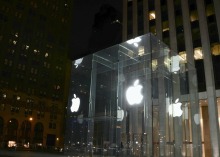
It is hard to remember now, but Apple’s launch of Apple retail stores was highly controversial back in 2001, at a time when Apple’s lead product was the Macintosh line of PCs, and had three percent market share (sales) on a five percent installed base of PCs.

Financial analysts worried about the impact on Apple profit margins. Other channel partners (retailers) were worried about the new competition. Some just argued Apple would never create enough revenue to cover the expense.

The industry had seen computer retailer bankruptcies, which probably did not increase confidence.

Given the decision to set up shop in high-rent districts in Manhattan, Boston, Chicago, and Jobs's hometown of Palo Alto, Calif., the leases for Apple's stores could cost $1.2 million a year each, argued David A. Goldstein, president of researcher Channel Marketing Corp.

Since PC retailing gross margins are normally 10 percent or less, Apple would have to sell $12 million a year per store to pay for the space. Gateway does about $8 million annually at each of its Country Stores, Goldstein argued at the time.

In the background, PC sales also were dropping. But Apple had its reasons for launching its own stores. For starters, when a firm only represents three percent of sales, it is hard to get shelf space or sales support from retailers.

That made it harder for Apple to expose and showcase its products, since many consumers might find it hard to even find a store selling Apple products. The retail computing landscape was ruled by a handful of giants that controlled which products were featured, where and how.

The system wasn't working for Apple, so In 1998, the company began pulling out of several of these stores, including Best Buy, Circuit City, and Sears, to puts its focus into a "store within a store" concept it had with retailer CompUSA.

In early 1999, Best Buy actually dropped the iMac line, after refusing Apple’s condition that Best Buy stock all eight colors of the iMac.  Sears, Roebuck stopped selling Apple products because of inconsistent and unpredictable sales volumes.

The theory was that in the new Apple stores, buyers would be able to experience Apple products in a controlled environment that was made separate from the sea of PCs, laptops, and gadgets from other vendors. Similar efforts can still be found in places like Best Buy.

But these "store within a store" concepts pitted Apple's products against others in an environment where potential buyers would walk just a few feet to go look at what others were offering. Hence the attraction of the branded Apple stores.

The concept was not original. Sony had launched its own retail stores Gateway had launched its own branded retail stores earlier, but also had to close those 27 stores. Gateway also had pioneered the “store-within-a-store” arrangement with OfficeMax.

And Apple almost took another route: launching Apple-branded cyber cafes . In 1996, Apple was working with the Landmark Entertainment Group and Mega Bytes International to create cyber cafes in Los Angeles, London, Paris, New York, Tokyo, and Sydney, Australia. There visitors would be able to surf the Web, grab a snack, and use Apple's latest hardware and software.

In the last few days of 1997, the cybercafe idea was quietly abandoned.

Microsoft launched its own line of retail stores in 2009.

The point is that highly personal and complicated products might require a retail store environment, not just for original sale but for follow-on advice and support.


Email ThisBlogThis!Share to XShare to Facebook
Posted in | No comments
Newer Post Older Post Home

0 comments:

Post a Comment

Subscribe to: Post Comments (Atom)

Popular Posts

  • Seattle's Gigabit Squared Fails: Sustainability Remains an Issue for Muni Access Networks
    Seattle's Gigabit Squared  network appears to have failed, illustrating a recurring problem with all municipal or joint venture Internet...
  • Access Networks Increasingly are All About Video
    In North America, r eal-time entertainment is responsible for over  68 percent of downstream bytes during peak periods, compared to 65 perce...
  • Using a Drone-Mounted Camera to See what a Surfer Sees "In the Water"
    If you've ever seen a picture of a surfer (the ocean kind), shot from shore, you have one view of what's going on, but you can't...
  • New Report Confirms: Investment or Competition is a Real Issue for Access Networks
    The latest Ofcom report on U.K. broadband infrastructure illustrates the inherent tension between promoting investment in next generation ne...
  • Google Fiber in Provo Prices Same as Kansas City
    Google Fiber  in Provo, Utah will be priced the same way as Google Fiber in Kansas City. People will be able to sign up for free 5 Mbps down...
  • EC to Review Telefonica, E-Plus Merger: How Many Carriers are Needed in Germany?
    European Union antitrust regulators will examine deals such as the proposal by Telefonica and Royal KPN to combine their German assets, base...
  • AT&T Tower Sale Raises, Does Not Answer, Question of "Core Competency"
    What is AT&T’s “core competency?” That is a question observers might raise, in the wake of AT&T’s decision to sell its U.S. mobile t...
  • How Big a Phone Will You Carry All the Time?
    How big a device will you carry with you, all the time, like you carry a mobile phone? Samsung Mega is going to provide some real-world tes...
  • To Attack U.S. Mobile Pricing Structure, Sprint and T-Mobile US Will Have to AddressTheir Own Cost Structures
    If a mobile service provider wants to attack prevailing retail prices in a serious way, it also has to attack its own operating and possibly...
  • Market Disruption is a Game Verizon Can Play as Well
    One often tends to think that big market disruptions are caused by small, upstart firms. History might suggest something quite different. Y...

Blog Archive

  • ►  2014 (23)
    • ►  January (23)
  • ▼  2013 (476)
    • ►  December (83)
    • ►  November (79)
    • ▼  October (127)
      • "Coverage" Limits Telco TV Gains
      • Netflix is Bigger than HBO and Comcast, on One Mea...
      • Netflix on Comcast X1 Platform "Not a High Priorit...
      • AT&T to Bid for Vodafone?
      • Will Access Networks Lose Value in Mobile Business?
      • When Customers Like Your Service Less, the More Th...
      • Bandwidth Matters: Sprint LTE Gets 6-8 Mbps at 1.9...
      • Sprint Makes Progress in 3Q 2013
      • Sprint Might Have an Opportunty with its Clearwire...
      • NFC Will "Never" Lead U.S. Mobile Payments?
      • Tom Wheeler Confirmed by U.S. Senate as New FCC Ch...
      • 4 or 3: the Most Important Number in the Mobile Bu...
      • Intel Media Preparing to End Effort to Create Srea...
      • Google Photos, Hangouts Enhanced
      • 15 Percent of 3G/4G Tablet Owners Pay for Data Plan
      • Time Warner Cable Upgrading to 100 Mbps in Some Ma...
      • If There is a Spectrum Bubble, Does it Martter?
      • Verizon Terremark Outage Blocks Healthcare.com Access
      • Motorola Ara: Smart Phones Like Legos
      • Amazon's "Profitless" Strategy is its Strategy
      • AT&T Delays Special Access Rate Changes
      • "Harvesting" Might be All Most Service Providers c...
      • New Licensed, Unlicensed, Shared Spectrum Proposal...
      • All 4 U.S. Leading Mobile Providers Abandon Metere...
      • Google Wi-Fi Passport: One More Way Google is Enab...
      • Can You Really Compete with "Free?"
      • Comcast Tests Demand for Antenna Basic Plus HBO
      • On Fiber or Copper Access Connections, Heavy Users...
      • Increase Access Speed 1 Mbps, Consumption Grows by...
      • Ethernet Delivers Most of the Bandwidth, Special A...
      • New Report Confirms: Investment or Competition is ...
      • Telekom Austria Wins Half of LTE Spectrum
      • Tablets, U-verse Drive AT&T 3Q 2013 Results
      • Mobile and Fixed Network ISPs Face Different "Key ...
      • LinkedIn: 38% of Visits are From Mobile Devices
      • Are Tablets Now Driving Net New Mobile Service Pro...
      • Fon Launches New Router to Help Build U.S. Fon Net...
      • Walmart Launches Tablet Trade-In Program
      • A Lost Decade of Revenue in Europe
      • If Airlines are Targeting Bus Travelers, What Can ...
      • The iPhone is a Proxy for the Smart Phone Market, ...
      • iPad Drives 81% of U.S. Tablet Data Consumption
      • North America Mobile Data Forecast: At Inflection ...
      • When "Carrier Class" is a Bad Idea
      • When will Netflix Be Bigger than HBO?
      • "Harvesting" and "Sowing" Define the Service Provi...
      • Will "Premium Pricing" Work Better for Some Device...
      • Smart Phone Saturation by 2015 in France, Germany,...
      • AT&T Tower Sale Raises, Does Not Answer, Question ...
      • There's Only So Much Service Providers Can Do, to ...
      • AT&T Adds Tesla to GM OnStar "Connected Car" Access
      • Mobile Network, OTT App Provider Return on Investe...
      • LTE Deployment Activity Moving to Asia-Pacific, La...
      • Tablets Not Replacements for PCs, Generally Speaking
      • U.S. Connected Device (Tablet, E-Reader) Adoption 43%
      • $22 Billion in M2M Revenues in 2017
      • Google Core Revenue Driver Now is Advertising; Cou...
      • 41 Percent of YouTube Viewing is on Mobiles
      • Mobile Customers, Accounts, Lines, Devices: What a...
      • Scratch Wireless Launches with "Wi-Fi First" Acces...
      • America Movil Abandons KPN Acquisition Effort
      • Google Fiber Adds ESPN, Disney Streaming for Smart...
      • Mobile Is Reaching Parity with Online Content Cons...
      • Mobile Data Volume Mostly Carried on Fixed Networks
      • Does Mobile Broadband "Cause" Economic Growth?
      • U.S. Mobile Business Becoming a Price Game?
      • How Much Video Piracy is Caused by Lack of Legal S...
      • Amazon Working on Smart Phone with HTC
      • Verizon Wireless Tests 80-Mbps Service in Manhattan
      • How Much Difference Will LTE Make in U.K. Market?
      • Is Nokia a Metaphor for European Mobile Business?
      • How Big a Problem are Smart Phone Device Subsidies?
      • U.S. Mobile Service Prices Actually are Quite Low
      • Structural or Cyclical Problems?
      • Australia to Study Impact of Broadband: Issue Real...
      • Do Phablets Cannibalize Tablet Sales?
      • Canadian Lawmakers to Introduce "A La Carte" Plan
      • LTE a 'Huge Opportunity' in Europe?
      • Netflix Move Complicates "Internet TVs"
      • Dumb Networks, Smart Networks and SDN
      • PayPal Beacon: Zero Touch Retail Payments
      • Mobile Service Providers Now are ISPs, Voice and T...
      • Mobile Market Might Require More Sophisticated Reg...
      • Voice had a Life Cycle; Does TV Also Have a Life C...
      • Cable Needs Content Buying Entity, and its Own Net...
      • CenturyLink to Deploy 1-Gbps Network to a Few Thou...
      • 34% of Millennials Do Not Watch Broadcast TV
      • New Markets Often are a Zero-Sum Game: Some Winner...
      • Peak Mobile Revenue in 2017?
      • What Market are Dish Network, DirecTV In?
      • U.K. Mobile Operators Face New £244.5 Million in A...
      • No Challengers in Belgium 800-MHz Spectrum Auction
      • Some Regulators Want More Investment, But European...
      • Mobile Internet Access Drives Telecom Industry Growth
      • Mobile TV Winners and Losers
      • In-App Purchases are Becoming a Dominant Mobile Ap...
      • Why Budgets Matter: Debt Load is "Unsustainable"
      • Huawei, Nokia in Top-4 Hanset Sales Ranks, But Sam...
      • Are U.S. Mobile Prepaid Data Plans Really Out of W...
      • NTT DoCoMo Sees Record Monthly Drop in Subscriptions
    • ►  September (95)
    • ►  August (92)
Powered by Blogger.

About Me

Unknown
View my complete profile